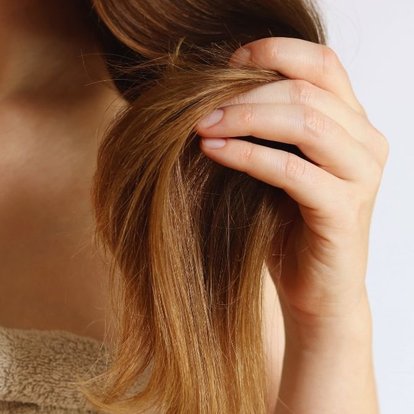
If your strands feel rough, brittle, or straw-like – or you’re left constantly asking yourself, “why is my hair so dry?” – you're not alone; and the fix is often simpler than it seems.
When it comes to how to prevent dry hair, small daily habits can matter just as much as the hydrating hair care products you use. Read on to uncover several potential dry hair causes and explore seven expert strategies for managing it from the experts at Dercos.
What is dry hair?
Dry hair occurs when the hair lacks or struggles to retain enough moisture and natural oils. If you have dry hair, you'll likely notice:
- Split ends
- Increased tangling
- Frizz and flyaways
- Brittleness or hair breakage
- Rough or coarse texture
- Dullness or reduced shine
- Hair that feels dry again shortly after washing or conditioning
Why is my hair dry?
Your dry hair could be caused by a range of different factors. Dry hair often comes down to the hair cuticle – the outer layer that protects each strand. When it's smooth and well-conditioned, it helps hair retain moisture and reflect light. But damage and moisture loss can leave the cuticle rough and uneven: affecting softness, shine, and the manageability of your hair. Read on for the most common dry hair causes.
Heat styling
While heat styling can leave your hair looking sleek and salon-fresh, it comes at a cost. The heat evaporates moisture inside the cuticle and robs your hair of its natural oils – a double hit that leaves hair without the hydration or protection it needs. Daily heat exposure can leave hair feeling constantly straw-like, and make split ends and breakage more likely.
Bleaching, colouring, and chemical treatments
Chemical processing can also affect the hair fibre and its ability to retain moisture. Whether it's bleaching, colouring, perming, relaxing, or straightening, these treatments work by altering the structure of the hair – and, with frequent use, this can contribute to increasingly dry or brittle lengths.
Washing habits
How often you wash your hair can play a role in the causes of dry hair, too.
Washing frequently helps get rid of scalp buildup, but it can also take with it the oils hair needs, particularly for those already prone to dryness. Water temperature also matters – very hot water can add to moisture loss, so it's worth keeping showers a little cooler when washing your hair.
Sun, swimming, and environmental exposure
The hot Australian sun, chlorine, and salt water can all take a toll on hair that's already dry. UV rays weaken the proteins that keep hair strong, while chlorine and salt draw out moisture and roughen the cuticle – why hair often feels coarser after a day at the pool or beach.
Hair type and natural oil distribution
Some hair types are simply more prone to dryness than others. In curly and coily hair, for example, the natural bends in the fibre make it harder for scalp sebum to travel down the length of each strand, leaving the ends drier than the roots. The hair’s oil production also naturally declines with age, a process which often starts in your late 40s to early 50s.
Dry hair vs dry scalp: what’s the difference?
Dry hair and a dry scalp aren't the same thing. Dry hair affects the hair fibre – showing up as roughness, dullness, frizz, and brittleness. Dry scalp affects the skin at the scalp and can lead to tightness, sensitivity, and dandruff. You can experience both at once or have just one, but – because the dry hair causes differ from those of a dry scalp – each concern needs its own targeted approach.
Learn more about how to care for a dry scalp with our guide on dandruff vs dry scalp, covering causes, treatments and prevention tips.
How to manage and prevent dry hair: 7 strategies
If you have dry hair, your haircare routine has two roles. One, give your hair as much hydration as possible, and two, help it stay there.
Read on as we explain what to use for dry hair to make this possible.
1. Choose a gentle shampoo
So, what shampoo is good for dry hair?
A dry hair shampoo should lift buildup from your scalp while being gentle enough to leave your natural moisture intact.
Our Mineral Soft - Soft and Fortifying Shampoo is gentle enough for daily use. Infused with mineral spa water and 15 essential minerals – including calcium and magnesium – it’s formulated to hydrate both your scalp and hair. Its hypoallergenic gel texture is comforting, even on a sensitive scalp, helping leave dry hair feeling stronger and shinier.
2. Condition after shampooing
Conditioner is what helps hydrate and soften dry, brittle ends to give hair that silky, smooth feel. It's best applied to the lengths and ends, rather than the scalp, since this is where hair is oldest, driest, and most in need of moisture.
If dryness is accompanied by brittleness and hair fall from breakage, introduce our Energy+ Fortifying Conditioner as a strengthening option. It's formulated with Aminexil – an ingredient that helps anchor hair to the scalp – along with amino acids, glycerin, niacinamide, and ceramides. These ingredients work together to deeply hydrate dry hair from within, making it easier to detangle and manage.
3. Turn down the water temperature
Water temperature is one factor in how to prevent dry hair that's easy to overlook. Use warm or lukewarm water rather than very hot water when washing your hair, since excessive heat can contribute to dryness and disrupt the scalp's natural oil balance.
For an extra boost, try finishing your shower with a cool blast of water – it can help lock in moisture and add a touch of extra shine.
4. Reduce excessive heat styling
If you're often left wondering, "why is my hair so dry" and reaching for heat tools daily, the suspect might be closer than you think. Try to cut back on unnecessary straightening, curling, and high-temperature blow-drying.
You don't need to give it up completely, but limiting heat styling to a couple of days a week – and always using a heat protectant when you do – can make a real difference.
5. Give chemically processed hair time to recover
Frequent bleaching, colouring, and other chemical treatments can contribute to dryness and breakage. If you start to notice your hair feeling dry and brittle, it's worth pausing colour treatments or spacing out your salon appointments to give your hair time to recover:
- Virgin hair: four to six weeks between appointments
- Previously coloured hair: four to eight weeks between appointments
- Extremely dry and damaged hair: eight to twelve weeks between appointments
6. Protect hair from sun, chlorine and salt water
As part of your summer hair care routine, rinse your hair as soon as possible after swimming to remove chlorine or salt and cover up with a hat or bandana during prolonged sun exposure. If your hair is already feeling particularly dry or stressed, try cutting back on pool or ocean exposure, or wear a swimming cap for extra protection.
7. Handle dry hair gently
Dry and damaged hair is more vulnerable to mechanical breakage, so if you're not sure how to manage dry hair, these small habits are a good place to start:
- Detangle carefully, starting at the ends and working upwards.
- Blot excess water gently instead of rubbing hair dry.
- Minimise very tight hairstyles to avoid regular tension on fragile strands.
- Book regular trims to stop split ends from progressing further up the fibre.
- Swap your regular towel for a microfibre towel or cotton T-shirt, which are gentler on the cuticle and help reduce frizz.
Now that you know what to use for dry hair, next discover the benefits of collagen for hair and how it can help strengthen damaged strands.